
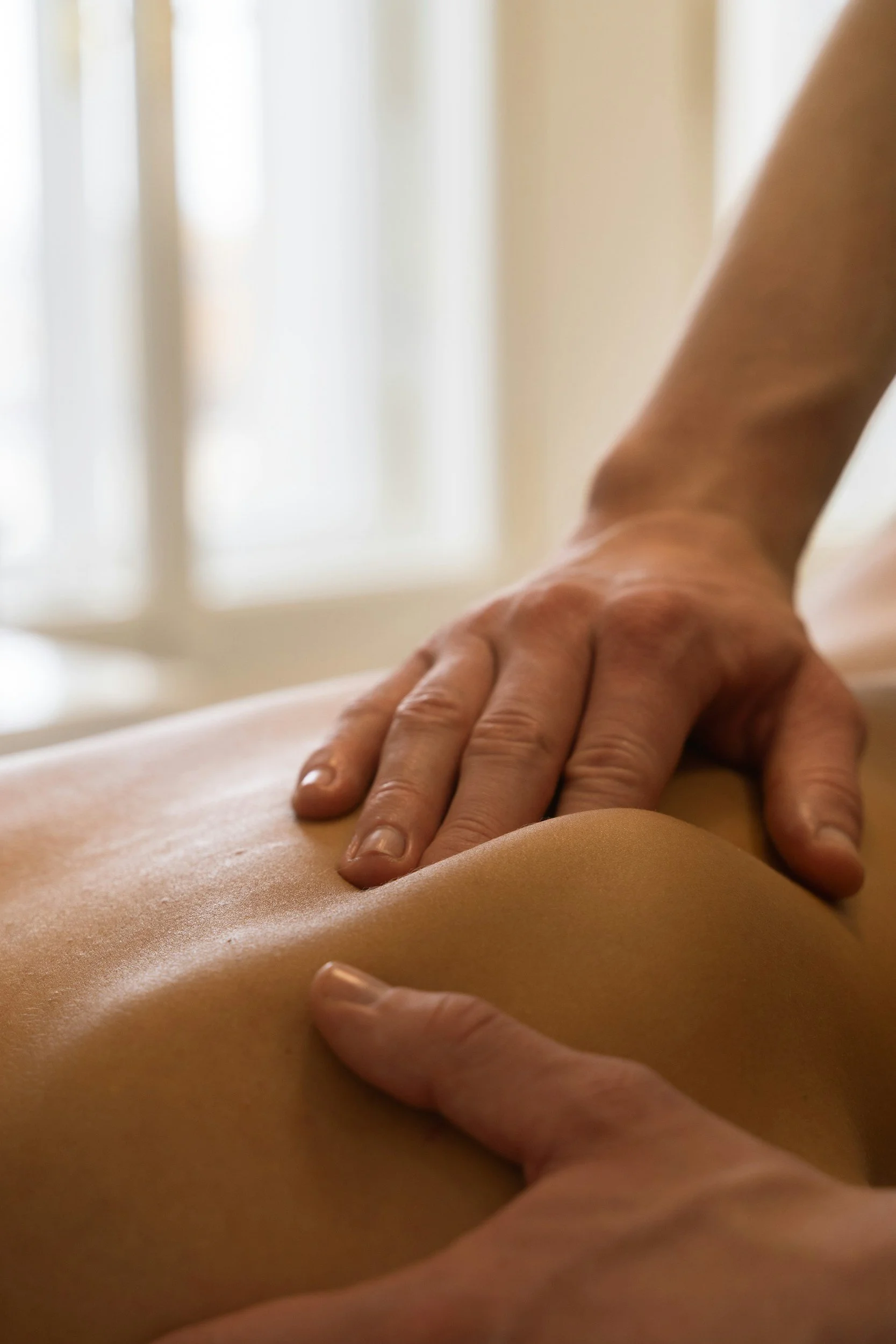
Massage Therapy Benefits: Why It’s Not Just Nice, It’s Essential
Massage therapy is often seen as a luxury, but science tells a different story. Far from being “just relaxing” or a nice-to-have, massage plays a powerful role in nervous system regulation, stress reduction, and overall health.
It is, in many ways, the ultimate somatic practice.
In a time where many people live disconnected from their bodies, we often ignore the signals until they become impossible to overlook, burnout, chronic anxiety, pain, or injury. Massage offers a way to reconnect before the body has to “shout.”
How Massage Affects the Nervous System
Massage stimulates pressure receptors (mechanoreceptors) in the skin and muscles. These receptors send signals to the brain that help shift the body out of fight-or-flight (sympathetic state) and into rest-and-digest (parasympathetic state).
This shift leads to:
reduced heart rate
decreased muscle tension
improved circulation
a deeper sense of physical and mental calm
In simple terms, massage helps the body reset and recover.
The Science Behind Stress Relief
Research shows that massage therapy can:
lower cortisol (the stress hormone)
increase serotonin and dopamine (mood regulators)
release endorphins (natural pain relievers)
These physiological changes explain why massage is effective for stress, anxiety, burnout, and sleep issues.
The Brain-Body Connection
Massage activates specialized nerve fibers called C-tactile afferents, which are linked to emotional processing rather than just physical sensation. These fibers send signals to areas of the brain involved in body awareness and emotional regulation.
This is why massage can make you feel not just relaxed, but safe, grounded, and connected.
Massage also stimulates the vagus nerve, a key communication pathway between the body and brain. Around 80–90% of its fibers carry information from the body to the brain, meaning your physical state strongly influences your mental and emotional state.
Massage for Stress, Burnout, and Pain
Chronic stress and emotional strain often manifest physically as:
muscle tension
headaches
fatigue
body aches
Massage therapy helps relieve these symptoms while also supporting emotional regulation and recovery.
Enhancing the Effects: Breathwork, Reflexology & Acupressure
Massage becomes even more powerful when combined with other body-based practices:
Breathwork helps regulate the nervous system more quickly
Reflexology stimulates internal systems through points in the feet and hands
Acupressure releases tension and supports energetic balance
Together, these approaches deepen relaxation and enhance the body’s ability to self-regulate.
Why the Body–Mind Connection Matters
Many people today live in a constant state of mental overload, disconnected from their physical sensations and emotional signals.
Massage helps restore this connection by bringing awareness back to the body.
This reconnection is essential for:
managing stress
processing emotions
improving overall well-being
Massage Is Not a Luxury, It’s a Tool
Massage therapy is a natural, non-invasive approach to supporting both physical and emotional health. When practiced regularly, it can help regulate the nervous system, reduce stress, and improve quality of life.
It doesn’t just feel good
it helps your body function better.